
SiteHive Hexanode devices offer versatile power options to suit various site conditions and operational needs, including mains power, solar power, and battery configurations.
Mains power
For locations with reliable access to electricity, SiteHive Hexanode devices can be powered directly via mains power. This setup involves connecting the device to an electrical outlet using the provided power adapter and provides continuous operation without the need for battery maintenance or solar exposure.
Daily power consumption per device:
Solar power
In remote or off-grid locations, solar power offers a suitable solution. SiteHive Hexanodes have low power requirements and can operate indefinitely with a 10 W or 20 W solar panel. The solar setup includes connecting the solar panel to a solar controller, which then connects to the device, ensuring an uninterrupted power supply. Proper orientation of the solar panel, typically facing north, is recommended for optimal sunlight exposure.
Battery options
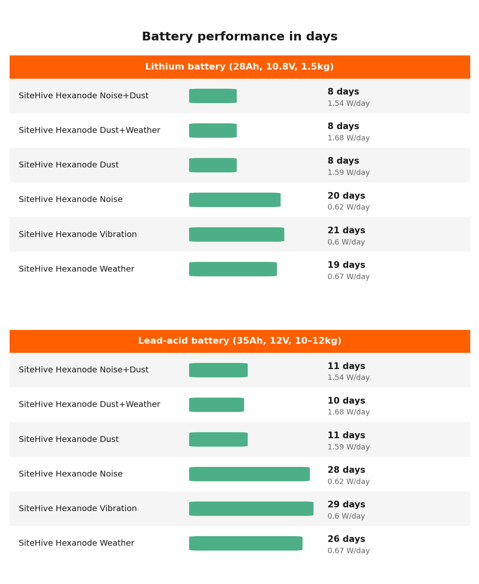
SiteHive devices support both lithium and lead-acid battery configurations. Lithium batteries have a smaller form factor and weigh less, so they are ideal for all types of mounting situations. Lead-acid batteries are heavier and bulkier, but have more capacity, so they run longer between charges. Choosing between the two depends on several factors, including mounting requirements and the amount of sunlight available at each location.
Typical runtime on a full charge, with no solar input:
💡 Avoid running a battery flat: deep discharges significantly reduce the number of recharge cycles the battery can deliver.
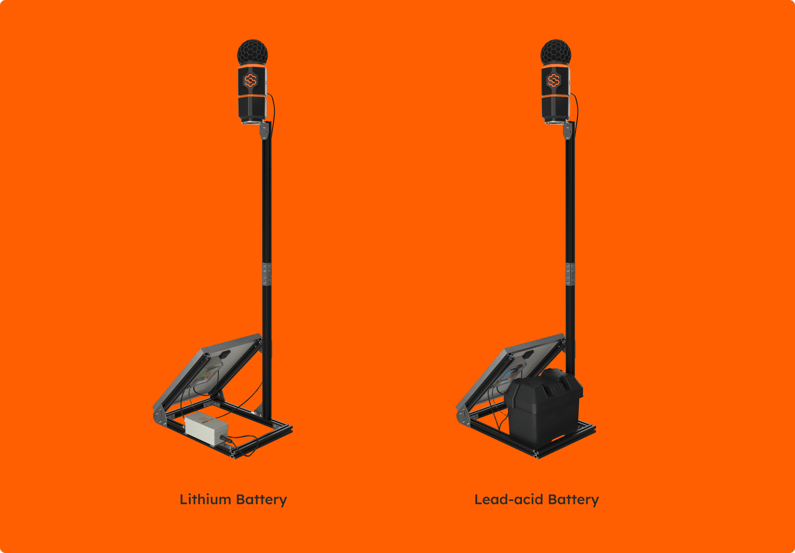
The two battery options shown with a SiteHive Hexanode Noise+Dust and solar setup:
Next: keep an eye on performance through the winter months with Keep Devices Online and Powered Up during winter, and see real installations in the Deployment Gallery.